Hemp ban, December 11: what changes
On December 11, 2026, the federal ban on intoxicating hemp THC takes full effect. Delta-8 gummies, THC drinks, THCA flower and other hemp products with more than 0.4 milligrams of THC per container will no longer count as legal hemp.
Updated November 12, 2026. Every figure links to its source.
Read the video transcript
On December 11, the federal ban on intoxicating hemp THC takes full effect. Delta-8 gummies, THC drinks and THCA flower over 0.4 milligrams per container stop counting as legal hemp. The cap is per container, not per serving. One 5 milligram THC drink is 12.5 times the limit. A 50 milligram Delta-8 treat is 125 times. Many come in candy and cereal look-alike packaging. Children under 6 were 58 percent of critical care admissions tied to Delta-8 exposures reported to poison centers. And bans work. States that banned Delta-8 had an exposure rate 8 times lower than states that left it unregulated. But a 38.5 billion dollar industry is lobbying for another delay, and December 11 is also when federal funding runs out. Thirty-five state attorneys general have told Congress not to delay or weaken the ban. December 11 is the day. No more delays.
- Congress banned intoxicating hemp THC in November 2025 by rewriting the federal definition of hemp.
- Phase one started November 12, 2026: products made with cannabinoids the cannabis plant cannot produce naturally are no longer hemp.
- Phase two starts December 11, 2026: finished products are capped at 0.4 mg of total THC per container, THCA counts toward THC, and cannabinoids converted in a lab, like Delta-8 made from CBD, are excluded.
- Products that fall outside the hemp definition are treated as marijuana under federal law.
- Hemp grown for fiber, grain and seed is not affected.
November 12 vs. December 11
The ban is Section 781 of the November 2025 funding law (Public Law 119-37). It was set to take effect all at once on November 12, 2026. A stopgap spending law signed September 2, 2026 (Public Law 119-103) pushed most of it back to December 11 and left one piece on the original date.
Cannabinoids the plant cannot make
Products containing cannabinoids that a cannabis plant cannot produce naturally lost their hemp status. Fully synthetic compounds like THC-O acetate fall here. This is a small slice of the market.
Everything else in the ban
The 0.4 mg per-container cap, the total-THC standard that counts THCA, and the exclusion for cannabinoids “synthesized or manufactured outside the plant,” which covers Delta-8 converted from CBD. This is most of what is on gas station shelves.
What gets banned on December 11?
The test is the same for every product: once the full ban is in effect, a finished hemp product can contain no more than 0.4 milligrams of total THC, plus cannabinoids with similar effects, in the whole container.
The FDA was required to publish lists of naturally occurring and THC-like cannabinoids by February 10, 2026. As of this update it has not, so the status of a few lesser-known compounds is still being argued over. The rules above follow the text of the law.
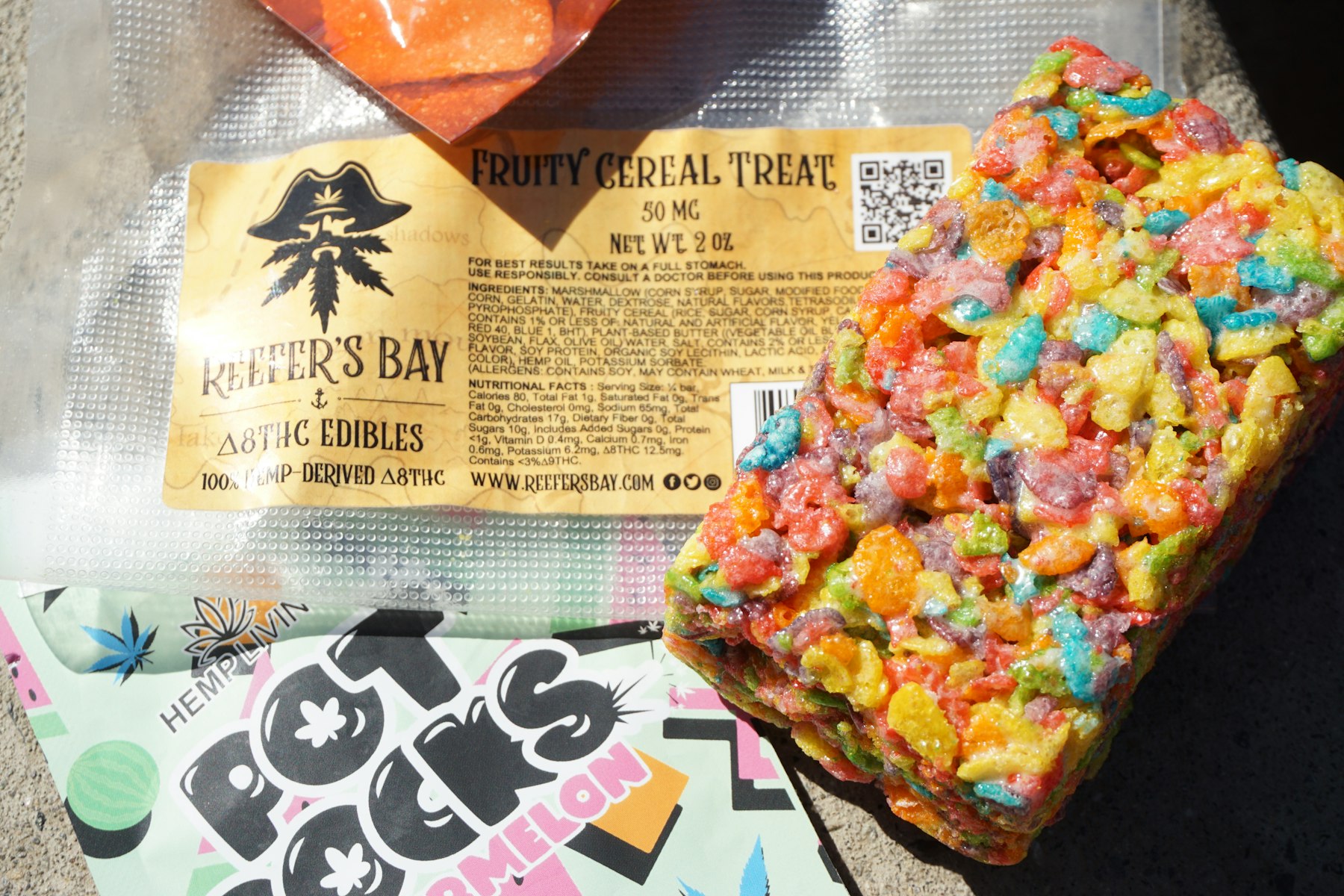
Why the cap shuts these products down
The limit applies to the whole container, not each serving. Here is how common products compare to it.
These are the products marketed in candy and cereal look-alike packaging that children mistake for snacks.
Why intoxicating hemp THC has to come off shelves
The 2018 Farm Bill legalized hemp with less than 0.3% Delta-9 THC. It said nothing about other intoxicating cannabinoids, and a multibillion-dollar market of unregulated THC products grew out of that loophole, with no federal safety testing, dosing standards or age limits.
of critical care admissions tied to Delta-8 exposures reported to poison centers were children under 6.
of 12th graders used Delta-8 in the past year, and 14% to 15% in the South and Midwest.
lower Delta-8 exposure rate in states that banned it than in states that left it unregulated. Bans work.
Will the hemp ban be delayed again?
The industry is trying. Intoxicating hemp sales reached an estimated $38.5 billion last year, according to Whitney Economics, and the companies behind them are lobbying Congress for another delay or for “regulation” that would make these products permanently legal.
December 11 is also the day current federal funding runs out. That makes the next spending bill the most likely vehicle for a delay, just as the September stopgap was.
Congress has already delayed the ban once. Thirty-five state attorneys general have told Congress not to delay or weaken it, and former DEA Administrator Asa Hutchinson has spoken out in support of the ban.
What to watch
- Any delay language in the December funding bill.
- Bills to replace the ban with a “regulated” THC market.
- The FDA’s overdue cannabinoid lists.
- States writing the ban into state law so it holds no matter what Washington does. See SAM’s state recommendations.
Hemp ban December 11: common questions
Is Delta-8 illegal after December 11, 2026?
Yes, under federal law. Starting December 11, Delta-8 made by converting CBD is excluded from the definition of hemp, and Delta-8 products over 0.4 mg of total THC per container are excluded too. Products outside the hemp definition are treated as marijuana under federal law. Many states already ban or restrict Delta-8.
Are THC drinks banned on December 11?
Hemp-derived THC drinks with more than 0.4 mg of total THC per container lose their status as legal hemp on December 11. Most THC seltzers and sodas contain several milligrams per can, many times the limit.
Is THCA flower banned?
The new definition counts THCA toward total THC. Starting December 11, flower with more than 0.3% total THC on a dry weight basis, including THCA, no longer qualifies as hemp.
Will CBD be banned?
CBD is not banned by name. CBD products with no more than 0.4 mg of total THC per container remain legal hemp. Some full-spectrum products with more THC than that do not.
What changed on November 12, 2026?
Products containing cannabinoids that the cannabis plant cannot produce naturally, such as THC-O acetate, lost their hemp status on November 12, the ban’s original effective date. Everything else was moved to December 11.
Will the hemp ban be delayed again?
The hemp industry is lobbying for another delay, and federal funding also runs out on December 11, so a delay could be attached to the next spending bill. Congress has delayed the ban once already. SAM is urging Congress to let December 11 stand.
Does the ban affect hemp farmers?
Hemp grown for fiber, grain, seed and other non-cannabinoid uses stays within the federal definition of hemp. The ban targets intoxicating THC products.
More on the hemp THC ban
December 11 is the day. Don’t let Congress move it again.
No more delays, and no “regulation” that makes intoxicating THC permanently legal.
Tell Congress: no more delaysSee SAM’s policy work- Public Law 119-37, Division B, Section 781 (2025), amending 7 U.S.C. 1639o. Summary: Congressional Research Service, “Changes to the Statutory Definition of Hemp,” IF13136.
- Public Law 119-103, Continuing Appropriations and Extensions Act, 2027 (signed September 2, 2026), delaying most of Section 781 to December 11, 2026.
- Congressional Research Service, “Changes to the Federal Definition of Hemp: Legal Considerations Under the Controlled Substances Act,” LSB11381.
- Forbes, “The $38 Billion Hemp Industry Has One Month To Live,” November 10, 2026 (Whitney Economics market estimate).
- Journal of Medical Toxicology, 2024; Monitoring the Future, 2024.


